Equipment platform · YGH-2Z-100P / YGH-4Z-100P
Independent Tracking Piston Filling Machine
The YGH platform uses independently controlled filling heads that follow the bottle path during piston filling. It is evaluated when continuous container movement, bottle handling and line balance need to be considered together.
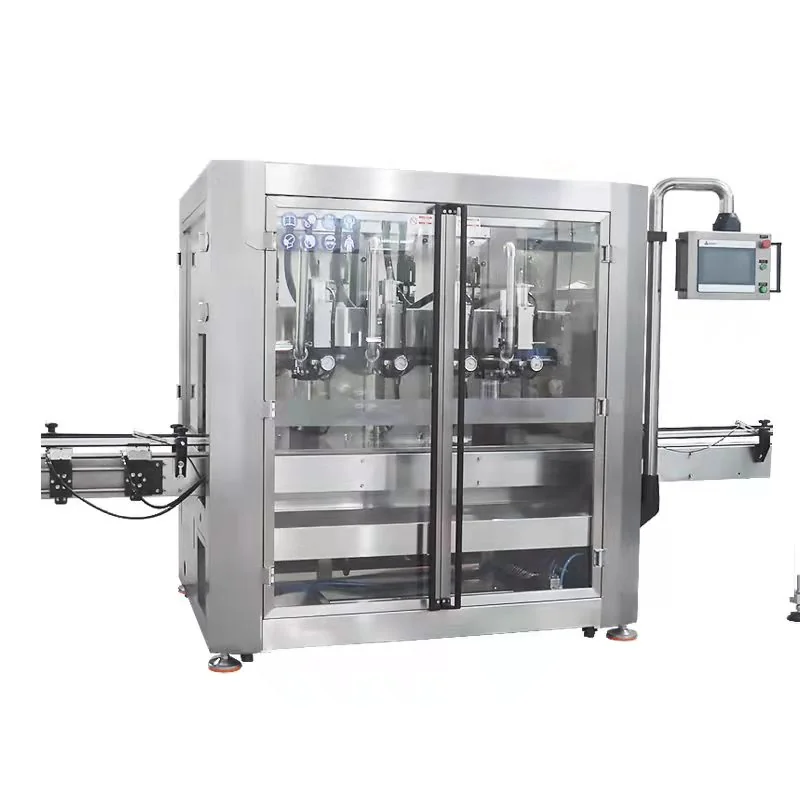
Pumpable water-like liquids, viscous liquids and creams in bottles, subject to product, particle, foaming and cleaning review
Independent tracking coordinates each filling head with the bottle path while servo-driven piston stroke meters the configured volume.
Selection boundary
When this architecture fits—and when it needs another review.
Evaluate this platform when
- Bottle lines where the filling head must follow the container path during the dosing cycle
- Pumpable liquids and creams whose flow and particle behavior can be handled by the confirmed piston and valve arrangement
- Projects that need two- or four-head documented configurations within the supported filling-volume range
- Standalone operation or integration with bottle handling, capping, labeling and inspection equipment
Do not select from the page alone when
- Products with untested large or irregular particles that may block the selected valve or nozzle
- Applications outside the documented filling range without a separate engineering review
- Projects that require a guaranteed speed or accuracy before representative product and containers are assessed
- Hygiene or compliance requirements that have not been defined in the technical agreement
Working principle
How the machine moves product and containers through the process.
- 01
Detect the incoming bottle
Photoelectric sensors detect container position and allow the control system to prepare the corresponding filling head.
- 02
Track and align
The filling head follows the bottle path and aligns the nozzle with the bottle opening.
- 03
Position the nozzle
The nozzle moves to the configured filling height; a rising movement can be evaluated for foaming products.
- 04
Meter by servo piston stroke
The servo-driven piston dispenses the programmed volume while the tracking system remains coordinated with the container.
- 05
Release to the next process
After filling, the nozzle returns and the bottle continues to the downstream capping, labeling or inspection operation.
Documented configuration
Publishable model and range information.
These are source-backed configuration references. Output, accuracy, utilities, dimensions and acceptance criteria are confirmed for the actual product and project.
| Model | Filling heads | Documented fill range | Evidence boundary |
|---|---|---|---|
| YGH-2Z-100P | 2 | 100–1000 mL | Documented configuration; final output and fill-control criteria depend on product and container testing. |
| YGH-4Z-100P | 4 | 100–1000 mL | Documented configuration; the final speed is not published because current source versions conflict. |
Verified operating facts
What is documented—and what it means in production.
Metering principle
Servo-driven pistonPiston stroke is set through the control recipe.
Bottle coordination
Independent tracking headsNozzle position is coordinated with the moving bottle path.
Container detection
Photoelectric no-bottle/no-fill controlThe corresponding filling action is disabled when the required bottle is not detected.
Product path
Quick-release piping and removable piston unitsDesigned to support disassembly, cleaning, inspection and seal maintenance.
Documented features
Features connected to operation and maintenance.
Final performance, materials, utilities and acceptance criteria depend on the confirmed product and technical agreement.
- Independent servo tracking for each filling head
- Servo-driven piston metering
- No-bottle/no-fill photoelectric control
- Stored bottle-format recipes
- Quick-release product piping
- Removable piston-cylinder assemblies
Daily operation
Plan changeover, cleaning and line interfaces before quotation.
Changeover
Bottle recipes can store operating positions, but guides, nozzle spacing and other mechanical settings still need to be confirmed for every format.
Cleaning
Quick-release connections and removable piston assemblies improve access. The actual cleaning procedure and any allergen or cross-contamination controls remain project requirements.
Line integration
Conveyor height, bottle spacing, accumulation and upstream/downstream speed must be reviewed so the tracking filler is balanced with the complete line.
Selection inputs
Information needed for configuration.
- Product viscosity, particles, temperature and foaming
- Fill volume, bottle dimensions and neck opening
- Representative product, bottle and closure samples
- Target output and surrounding line speeds
- Cleaning method and changeover frequency
- Required acceptance method for fill control
Buyer questions
Questions to resolve before equipment selection.
The answers describe the current evidence boundary and the information required for a project-specific proposal.
Does a tracking filler guarantee a higher output?
No. Tracking changes how filling is coordinated with bottle movement, but achievable output still depends on product behavior, fill volume, bottle handling, nozzle quantity and the surrounding line.
Can it handle thick sauces or creams?
It can be evaluated for pumpable viscous products. Viscosity, particles, temperature, stringing and cleaning requirements should be reviewed with representative product.
Can the same machine run different bottles?
The documented platform supports stored bottle-format data and mechanical adjustment. Drawings and samples are required to confirm each bottle, neck opening and changeover scope.
What is needed before a formal quotation?
Provide product information, fill volumes, bottle and closure samples, target output, cleaning expectations, available space and the required fill-control acceptance method.
Related planning content
Connect the machine to the application and line requirement.
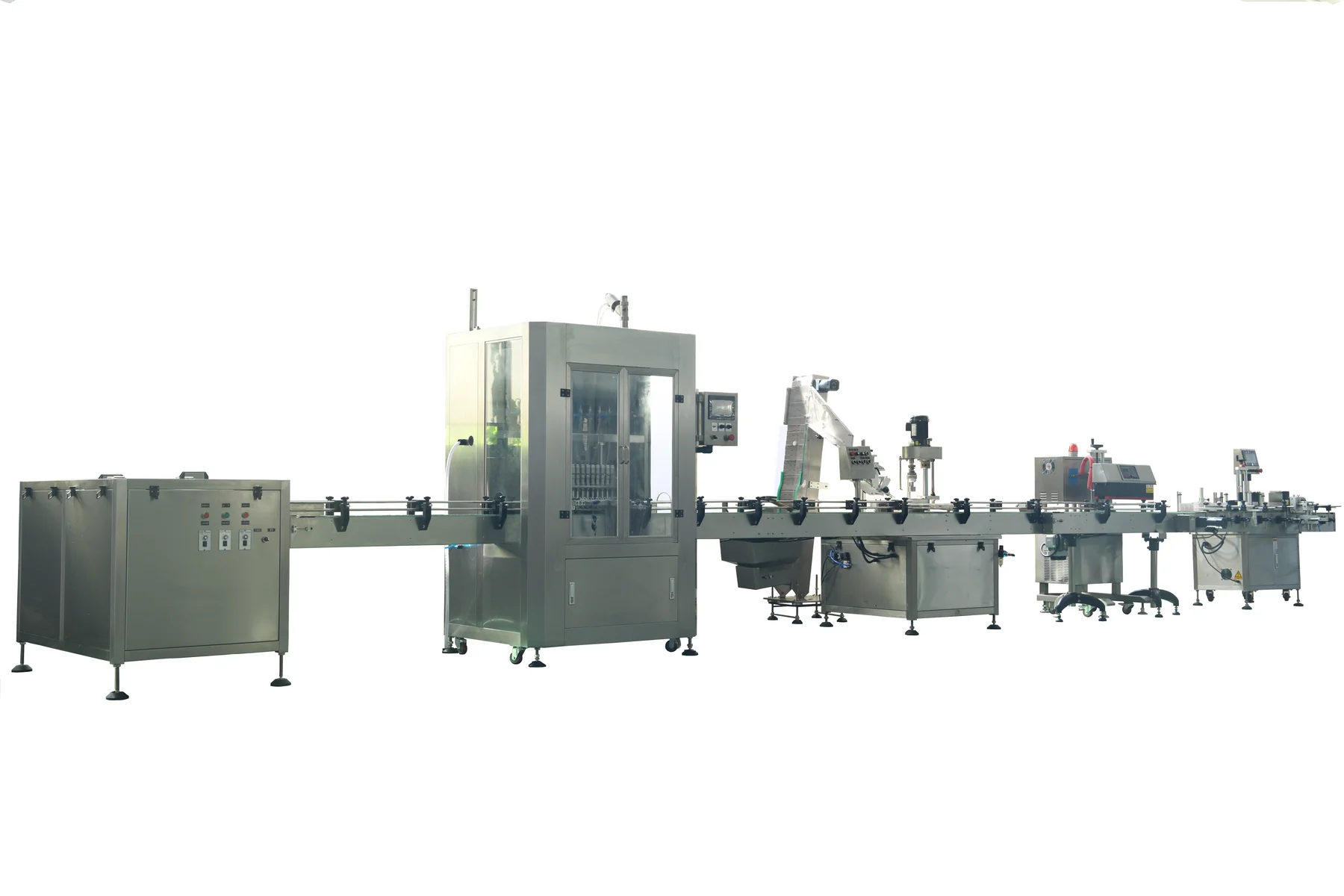
Sauce filling selection guide
Selecting a sauce filling method
Choose the filling principle after reviewing how the product behaves, how the container is handled and how the product path will be cleaned—not from a catalogue label alone.
Read the guide →Published facts are limited to the documented models, head counts, filling range and operating principles. Speed, accuracy, certification and compliance claims remain excluded pending unified technical evidence.
Start with the production task
Share the product, pack and output you need to run.
Prepare your material, container, closure, label, target output and available floor space. These inputs define the right next step.
Prepare your project brief →