Product behavior
Describe viscosity, particles, foaming, stringing, dripping and any temperature-related changes. A sample or controlled filling trial may be needed when the behavior cannot be described reliably.
Sauce filling selection guide
Choose the filling principle after reviewing how the product behaves, how the container is handled and how the product path will be cleaned—not from a catalogue label alone.
For production managers, engineers and buyers preparing a sauce, dressing, seasoning or other condiment bottling project.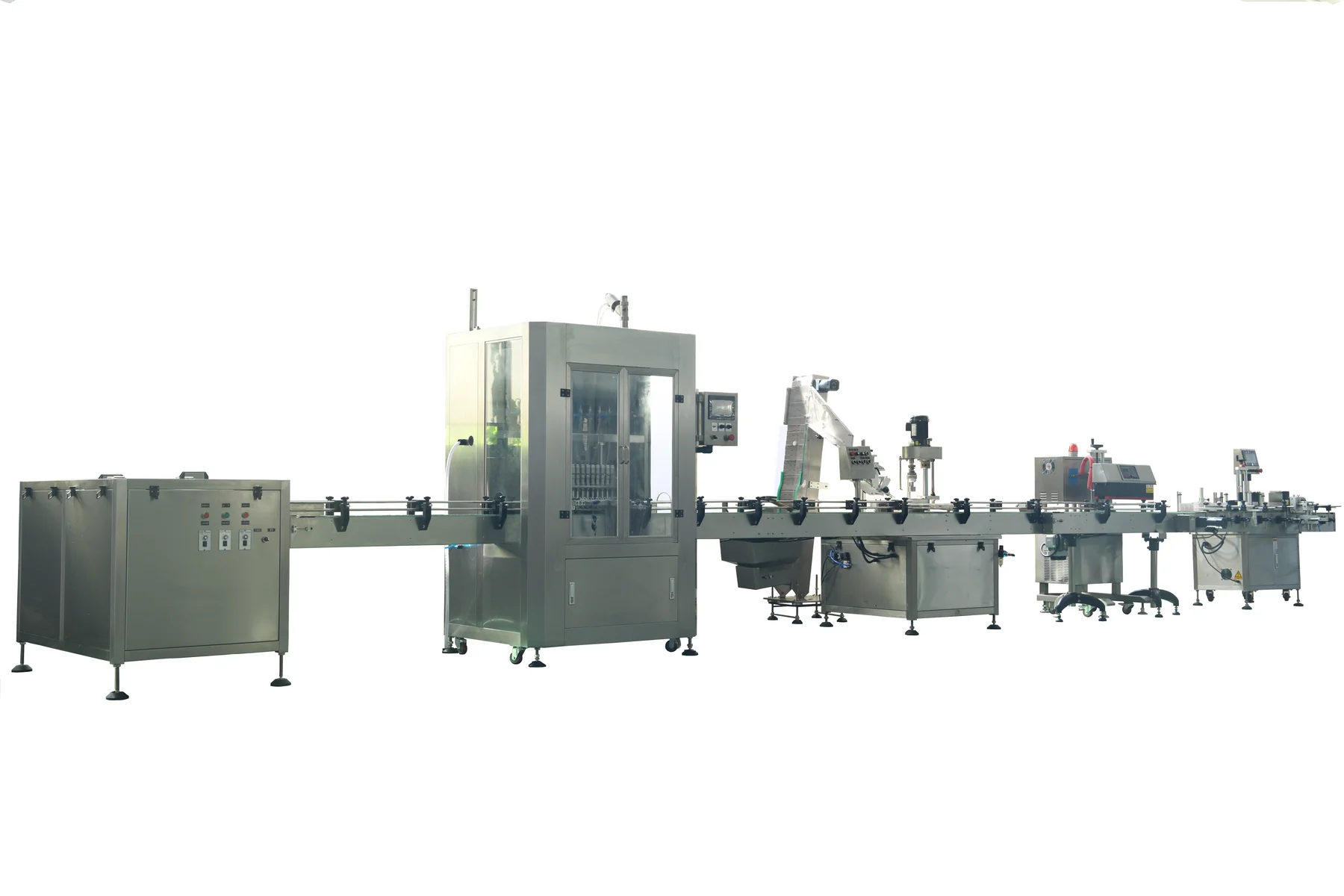
Selection decisions
Describe viscosity, particles, foaming, stringing, dripping and any temperature-related changes. A sample or controlled filling trial may be needed when the behavior cannot be described reliably.
Confirm fill volume, bottle material, dimensions, neck opening and stability. The opening and bottle geometry affect nozzle size, positioning and the way containers move through the filler.
Define how often products change, how the product path will be cleaned and which parts operators must access. Hopper, piping, valves and nozzles should be reviewed as one product-contact path.
Review bottle infeed, filling, cap feeding, capping, labeling, inspection and accumulation together. The selected filler must work with the surrounding line rather than becoming an isolated speed target.
Information checklist
Working process
When one line will run several sauces, identify the product that is hardest to meter, shut off or clean. The line should not be selected only around the easiest recipe.
Evaluate the metering method against the confirmed product and fill requirement. Piston, tracking or another configured method is selected only after the application data is reviewed.
Nozzle movement, shut-off approach, drip collection, hopper and piping access are application decisions. They should be included in the technical discussion before quotation.
Match filling with bottle handling, closure application, labeling, inspection, controls and accumulation. Then define the information and trials required before final acceptance criteria are agreed.
Buyer questions
No single filling principle is suitable for every thick product. Viscosity, particles, fill volume, temperature, target output and cleaning method must be reviewed together.
It can be evaluated after the product range, bottle drawings, samples, closures, changeover frequency and cleaning expectations are confirmed.
The engineering review may consider nozzle shut-off, nozzle movement, product pressure, filling recipe and collection provisions. The appropriate combination depends on the actual product.
Provide the product and pack checklist on this page. A quotation is more useful when it is tied to a defined product, container, closure and target output.
Start with the production task
Prepare your material, container, closure, label, target output and available floor space. These inputs define the right next step.
Prepare your project brief →