Equipment platform · YGZ-H100 Series
Linear Servo Piston Filling Machine
The YGZ-H100 Series meters product at fixed bottle positions with servo-driven pistons. Bottle positioning, nozzle movement, product path and cleaning access are configured around the actual material and container.
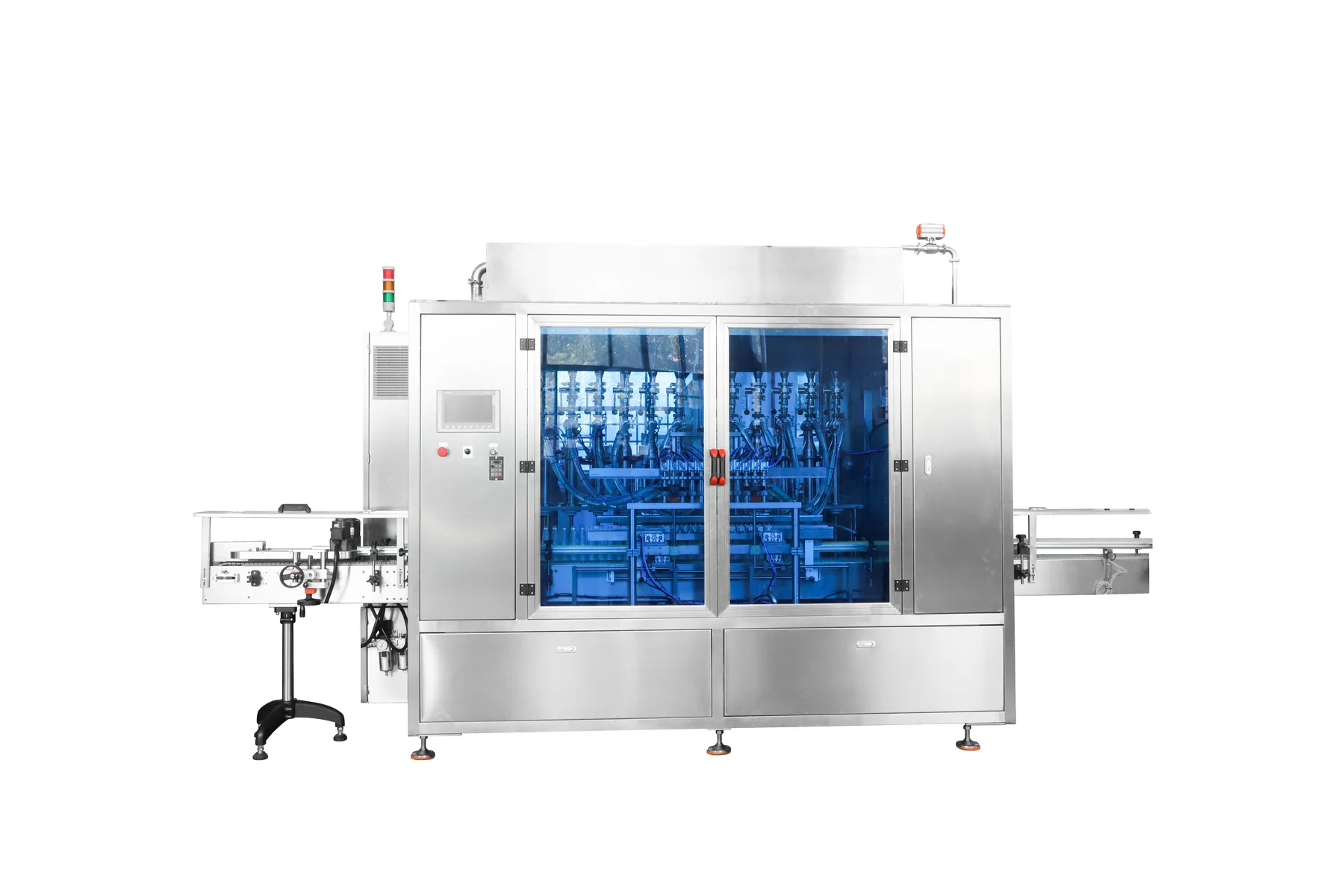
Pumpable liquids, viscous products and creams in food, supplement, personal-care and related bottle-filling applications
Fixed-position bottle control, servo piston metering and configurable nozzle movement connect fill-volume adjustment with the real product and bottle format.
Selection boundary
When this architecture fits—and when it needs another review.
Evaluate this platform when
- Pumpable liquids and creams within the documented filling-volume range
- Bottles that can be stopped and positioned as a group under the filling nozzles
- Applications that benefit from recipe-based servo piston stroke and configurable nozzle movement
- Standalone fillers or lines connected to unscrambling, capping, labeling, inspection and case-packing equipment
Do not select from the page alone when
- Products whose particles or flow behavior have not been checked against the selected piston, valve and nozzle
- Unstable containers that cannot be repeatably stopped and aligned without format-specific handling
- Projects relying on unconfirmed scaled output, power, weight or machine-length values
- Applications requiring a published accuracy commitment before the test product and acceptance method are agreed
Working principle
How the machine moves product and containers through the process.
- 01
Detect and count bottles
Sensors confirm that the required containers have entered the filling zone.
- 02
Stop, clamp and align
Bottle stops and clamps position the containers while the nozzle assembly aligns with the bottle openings.
- 03
Lower the nozzles
The nozzles descend to the configured filling position; movement with the liquid level can be evaluated for foaming products.
- 04
Dispense by piston stroke
Servo-driven pistons deliver the recipe-controlled volume through the configured product path.
- 05
Return and release
The nozzles rise, the positioning mechanism releases the bottles and the conveyor transfers them downstream.
Documented configuration
Publishable model and range information.
These are source-backed configuration references. Output, accuracy, utilities, dimensions and acceptance criteria are confirmed for the actual product and project.
| Model | Filling heads | Documented fill range | Evidence boundary |
|---|---|---|---|
| YGZ-H100 documented baseline | 8 | 100–1000 mL | The eight-head source configuration supports the series page. Other head counts and all related output, power, dimensions and weight require formal technical confirmation. |
Verified operating facts
What is documented—and what it means in production.
Machine layout
Linear, fixed-position fillingBottles are stopped and aligned for each filling cycle.
Metering principle
Servo piston strokeFill settings can be stored and recalled through the HMI.
Nozzle movement
Configurable diving fillThe movement profile is selected after reviewing foaming and bottle geometry.
Product path
Quick-release piping and removable piston assemblySupports access for disassembly, cleaning, inspection and seal replacement.
Documented features
Features connected to operation and maintenance.
Final performance, materials, utilities and acceptance criteria depend on the confirmed product and technical agreement.
- Fixed-position bottle stop and clamp sequence
- Servo-driven piston metering
- Diving-nozzle configuration
- No-bottle/no-fill control
- HMI recipe storage
- Quick-release, inspectable product path
Daily operation
Plan changeover, cleaning and line interfaces before quotation.
Changeover
Recipe recall supports repeatable settings, while bottle guides, stops, clamps and nozzle positions must still be adjusted and verified for each format.
Cleaning
The product-contact path is designed for removal and inspection. Cleaning media, product-change sequence and operator access must be defined for the application.
Line integration
The filler can be connected to bottle infeed, capping, labeling, inspection and secondary packaging after conveyor height, direction, accumulation and interlocks are confirmed.
Selection inputs
Information needed for configuration.
- Product viscosity, temperature, particles and foaming
- Target fill volume and tolerance requirement
- Bottle diameter, height, neck opening and stability
- Target output and confirmed head configuration
- Product-contact and cleaning procedure
- Conveyor height, line direction and interlock signals
Buyer questions
Questions to resolve before equipment selection.
The answers describe the current evidence boundary and the information required for a project-specific proposal.
Which products suit a linear piston filler?
Pumpable liquids, viscous products and creams can be evaluated. Product viscosity, particles, temperature, foaming and cleaning requirements determine the piston, valve, nozzle and product-path design.
How many filling heads are available?
The current public evidence supports an eight-head baseline. Other head counts must be confirmed as formal configurations before their output, dimensions, power or weight are published.
Can diving nozzles reduce foaming?
A nozzle movement profile can be configured to follow the filling process, but the result depends on product behavior, fill rate, nozzle design and bottle geometry.
What should be supplied for selection?
Provide representative product and bottles, target fill volumes, output, tolerance and test method, cleaning procedure, utilities, floor space and line-interface information.
Related planning content
Connect the machine to the application and line requirement.
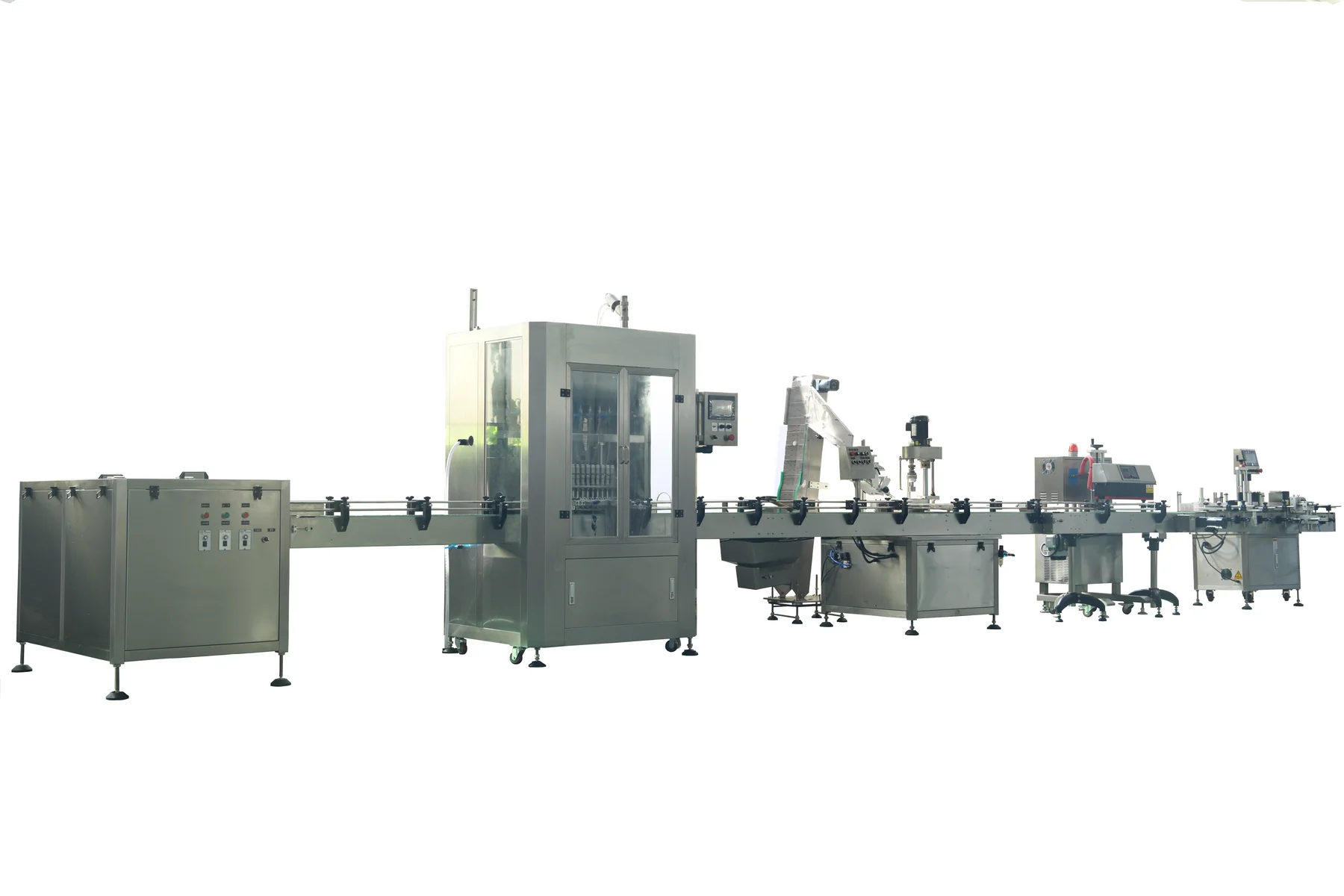
Sauce filling selection guide
Selecting a sauce filling method
Choose the filling principle after reviewing how the product behaves, how the container is handled and how the product path will be cleaned—not from a catalogue label alone.
Read the guide →The page uses the user-confirmed YGZ-H100 Series name and the documented eight-head, 100–1000 mL baseline. Scaled values for other head counts, accuracy, certification and compliance are not published.
Start with the production task
Share the product, pack and output you need to run.
Prepare your material, container, closure, label, target output and available floor space. These inputs define the right next step.
Prepare your project brief →