Primary application
Food & Condiment Filling Lines
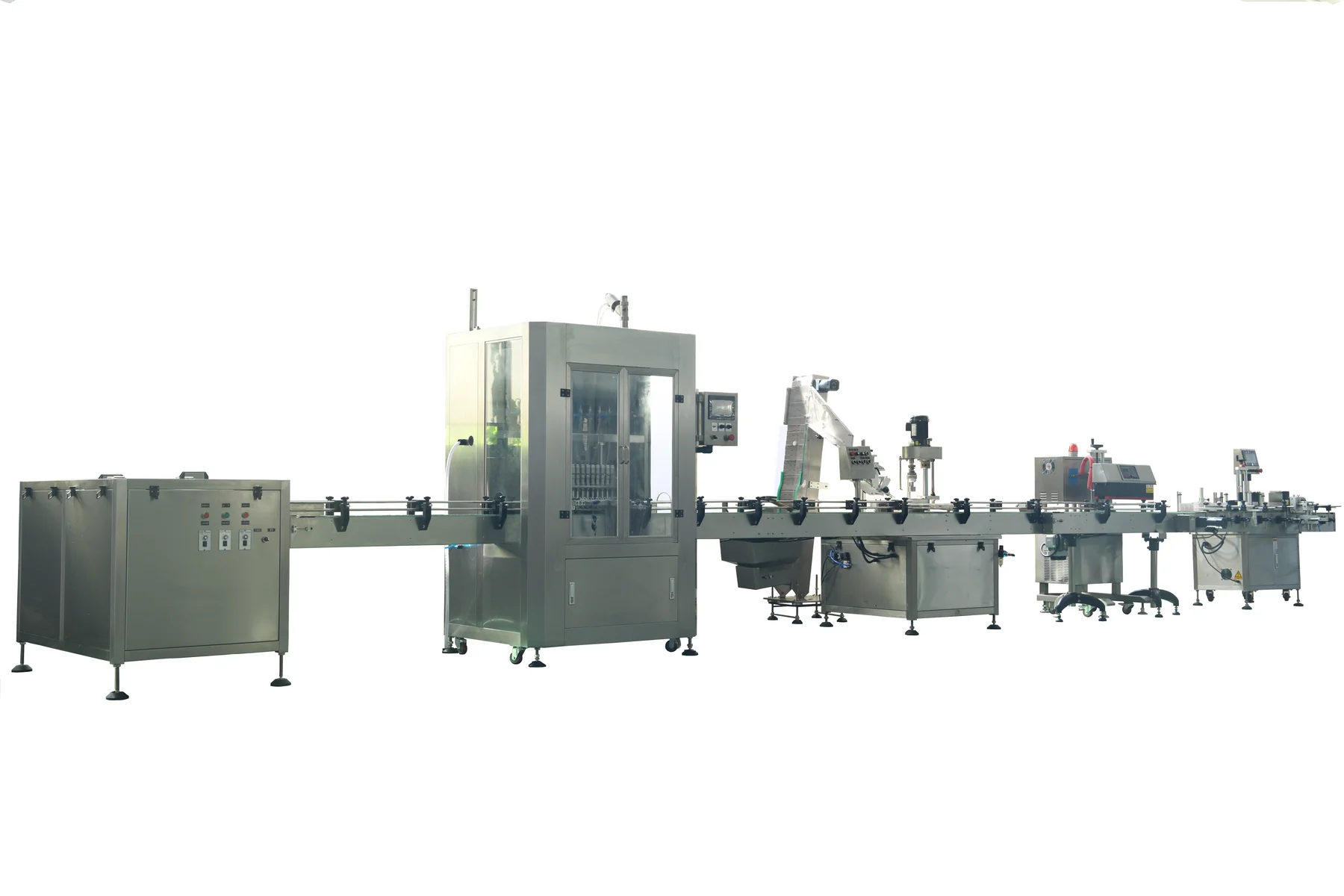
Sauces and condiments can vary in viscosity, particle content, foaming and temperature sensitivity. The line must consider how the product flows, how filling stops cleanly and how the product path will be cleaned.
Production questions
What the line needs to manage.
- Viscosity changes and suspended particles
- Dripping, stringing and foaming
- Container and recipe changeovers
- Cleaning access across the product path
Connected scope
Modules planned as one flow.
- 01Bottle handling or infeed
- 02Optional container cleaning
- 03Configured filling method
- 04Cap feeding and capping
- 05Labeling, coding and inspection
- 06Accumulation or secondary packaging
Configuration decisions
Make the critical choices before production.
Nozzle movement and drip control
Hopper, piping and cleaning access
Capping method for the closure
Speed balance and accumulation
Change parts and recipe management
Buyer questions
Questions to resolve before selection.
Answers remain application-specific. Confirmed product, pack and output information is required for the final configuration.
Which filling method is suitable for thick sauces?
The choice depends on viscosity, particles, fill volume, product temperature and cleaning expectations. Product information or a filling trial is required before final selection.
Can one line handle several bottle sizes?
Multi-format production can be evaluated after bottle drawings, samples, cap types and label positions are reviewed.
How can dripping be reduced?
Nozzle shut-off design, diving motion, product pressure, fill recipe and receiving trays may be considered depending on the product.
Can inspection and secondary packaging be added?
Coding, vision inspection, weight inspection, cartoning and case packing can be evaluated as part of the complete line flow.
Related buyer guides
Prepare the information needed for configuration.
Use these guides to organize application and packaging data before a detailed line discussion.
Sauce filling selection guide
Selecting a sauce filling method
Choose the filling principle after reviewing how the product behaves, how the container is handled and how the product path will be cleaned—not from a catalogue label alone.
Read the guide →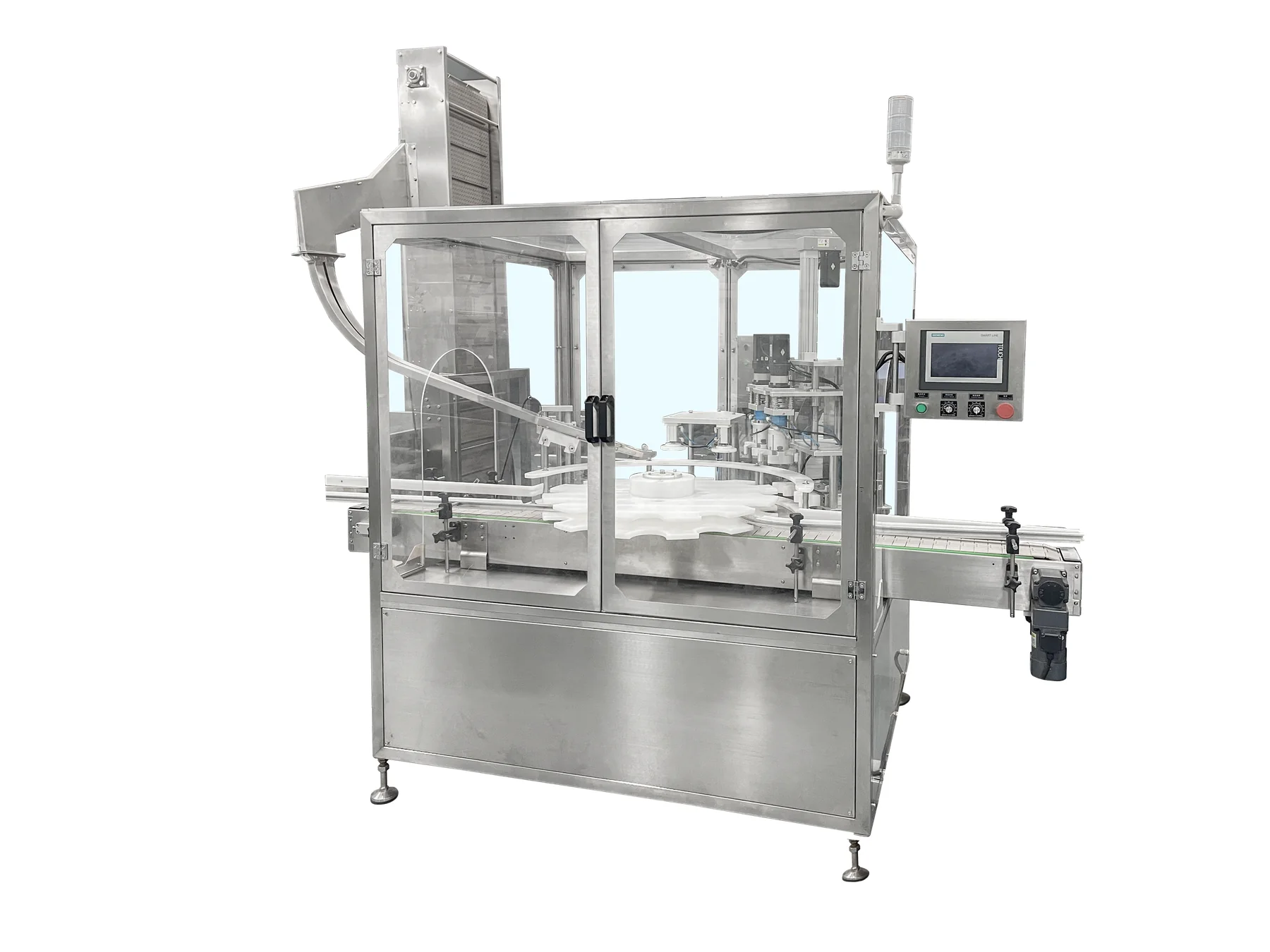
Packaging sample checklist
Bottle and cap information checklist
Bottle and closure details affect filling position, conveying, cap feeding, tightening, labeling and changeover. Supplying drawings and representative samples early reduces avoidable assumptions in a line proposal.
Read the guide →Start with the production task
Share the product, pack and output you need to run.
Prepare your material, container, closure, label, target output and available floor space. These inputs define the right next step.
Prepare your project brief →